


When reviewing a Fortrade complaint, it is important to understand that disputes in financial services can arise for different reasons. Sometimes they reflect a misunderstanding of how a trading product works. In other cases, they raise questions about how a service has been delivered. Identifying the source of a disagreement is often more useful than focusing on the disagreement itself.
People searching for information about a Fortrade complaint may be trying to understand a specific transaction, clarify an account issue or find out how a disagreement with a trading provider can be resolved.
Before reaching conclusions, it helps to distinguish ordinary market risks from questions about how a financial service has been delivered.
Why do trading disputes arise?
Trading involves several processes that are not always visible to the person placing an order.
Market prices change continuously, transactions are subject to execution conditions, and accounts operate under contractual requirements. A disagreement can arise when a customer’s expectations differ from the outcome of one of these processes.
For example, a trader may expect an order to execute at a particular price, only to discover that it was completed at a different level during a period of market volatility.
In another situation, a withdrawal may require additional identity verification or confirmation of payment details.
Neither example automatically establishes that a provider has acted improperly. However, both may justify questions about the applicable conditions, the information provided to the customer and whether the process was handled correctly.
The first step is identifying exactly what happened rather than treating every unexpected outcome as the same type of problem.
Trading losses and service complaints are not the same
One of the most important distinctions is between financial losses and possible service failures.
Contracts for Difference (CFDs) allow traders to speculate on price movements without owning the underlying asset. These instruments involve substantial risk, particularly when leverage magnifies the effect of market fluctuations.
A position losing value because the market moves against it is not, by itself, evidence of a broker error.
Nevertheless, market risk does not eliminate a provider’s responsibilities.
A customer may have legitimate questions about the price used to execute an order, the application of overnight charges, the operation of a stop order or whether relevant information was clearly disclosed.
For instance, stop orders do not necessarily guarantee execution at the exact requested price, especially during rapid market movements. Whether an execution was consistent with the applicable terms requires examining the circumstances and available records.
The relevant question is therefore not simply whether a loss occurred, but whether the service was provided in accordance with the applicable rules and contractual conditions.
What Account Records Reveal About a Fortrade Complaint
When examining a Fortrade complaint, documentation can be more useful than relying on memory alone.
Trading platforms generally provide records of transactions, including opening and closing times, instrument details, order types and execution prices.
Account statements may also show deposits, withdrawals, fees and other adjustments.
These records can help establish a timeline.
Consider a customer questioning why a position closed earlier than expected. The account history may show whether the closure followed a stop order, a margin-related event or another instruction.
Similarly, a withdrawal dispute may become clearer when the request date, verification correspondence and payment records are examined together.
A clearer picture often emerges when transaction histories and account statements are considered alongside correspondence with customer support. Screenshots, request dates and reference numbers can provide additional context, while the contractual terms in effect at the time help establish which conditions applied. Examining these elements together makes it easier to identify inconsistencies or information that still needs clarification.
Records do not necessarily resolve every disagreement. However, they provide a factual basis for examining what happened and identifying information that may still be missing.
How to Submit a Fortrade Complaint?
The appropriate starting point depends on the nature of the issue and the legal entity providing the trading service.
Fortrade publishes customer-support contact details through its official website. These channels can be used to seek clarification about account-related or technical questions.
Customer support and formal complaints serve different purposes. A support enquiry may involve requesting information, resolving a technical difficulty or asking for clarification about an account event. A formal complaint, by contrast, expresses dissatisfaction with a service or its handling and requests that the matter be examined through the applicable complaints procedure.
Someone preparing a complaint should describe the issue clearly, identify the relevant transaction or account event, provide supporting documentation and explain what outcome they are requesting.
For example, rather than stating only that an order was executed incorrectly, the customer could identify the instrument, transaction time, expected execution conditions and the discrepancy being questioned.
A written explanation also creates a record of the concern and any subsequent response.
Using the appropriate channel helps ensure that the issue reaches the organisation responsible for examining it.
Customers wishing to submit a formal complaint should consult the complaints procedure published by the Fortrade entity responsible for their account and follow its stated submission instructions. The relevant account documentation and official website are the appropriate starting points for identifying that procedure.
For the firm’s published terms and legal disclosures, consult the Fortrade legal documents and check which entity and jurisdiction apply to the account.
Why the legal entity behind an account matters
International brokerage services may operate through several companies, each subject to its own regulatory framework. This distinction becomes particularly relevant when questions arise about account conditions, customer rights or the handling of a disagreement.
Fortrade operates through different legal entities, so the procedures and protections available to one customer may not be identical to those available to another.
A customer dealing with an entity regulated in one jurisdiction should not assume that the same complaint mechanisms apply to an account held under a different entity.
The relevant information is generally found in the account agreement, the provider’s legal disclosures and the records maintained by the corresponding regulator.
Understanding which company provides the service is therefore more than an administrative detail. It helps establish the contractual and regulatory context in which an account-related concern should be examined.
What Can Traders Learn From a Fortrade Complaint?
Disputes often highlight aspects of trading that receive less attention than market forecasts or potential returns.
Execution conditions, verification requirements, account charges and communication procedures can all influence the experience of using a financial service.
Understanding these matters before placing a trade may reduce confusion later, although it cannot eliminate market risk or prevent every operational problem.
For anyone researching a Fortrade complaint, the most useful approach is to examine the specific circumstances rather than assume that every disagreement has the same cause.
Was the issue connected to market movements, account administration, execution conditions or communication? What evidence is available? Which contractual terms apply?
Answering these questions provides a stronger foundation for understanding the situation.
For related background on trading services and platforms, see BrokerReviews’ platform coverage. This material provides general context rather than a determination of any individual complaint.
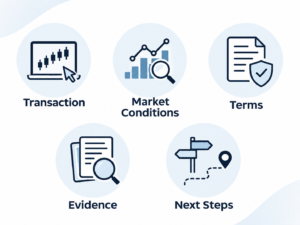
Five questions worth asking before drawing conclusions
Before interpreting an unexpected trading outcome as a service failure, it can help to consider five questions:
- What exactly happened? Identify the specific transaction, account event or communication that raised concerns.
- Could market conditions have influenced the outcome? Price volatility, spreads and execution conditions may explain some unexpected results.
- Were the applicable terms clear? Check whether the relevant charges, requirements or trading conditions were disclosed.
- Does the available evidence support the explanation? Compare account records with the information provided by the trading platform or service provider.
- Is there still an unanswered question? If the available information does not explain what happened, further clarification or a formal complaint may be appropriate.
A clearer picture starts with the facts
A trading dispute may begin with an unexpected outcome, but understanding it requires more than identifying what went wrong from the customer’s perspective.
The distinction between market risk, contractual conditions and service-related concerns is essential.
Accurate records, clear communication and knowledge of the applicable complaint procedure can help establish what happened and which questions still require answers.
Ultimately, a complaint should be assessed on its particular facts. Neither an unexpected loss nor an explanation from a service provider should replace a careful examination of the evidence.