

China vs USA
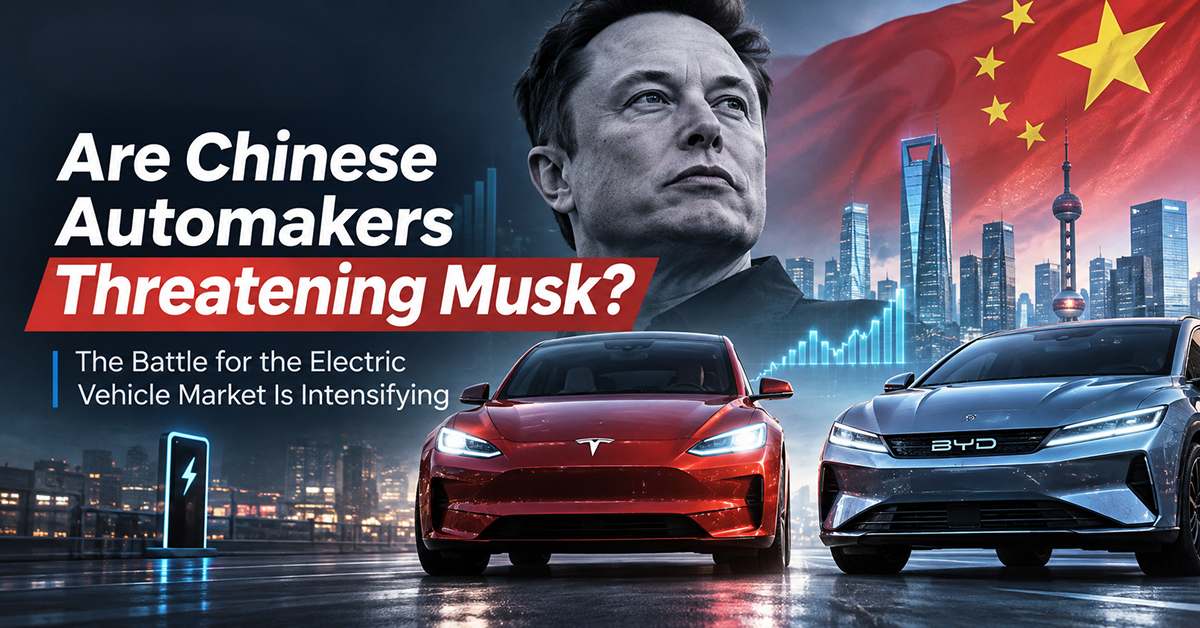
The economic rivalry between China and the United States has been going on for years, and it has become almost a normal part of the global economic landscape. The wave of innovation that began several years ago pushed China and several other countries to become more deeply involved in the global capitalist system and challenge America’s dominance. China has not only managed to catch up but has also established itself as a major economic power, increasingly challenging the Western world. One particularly interesting example of this shift is the electric vehicle industry. Chinese electric car manufacturers represent a major competitive threat to Tesla, the American electric vehicle pioneer led by CEO Elon Musk. In recent years, Chinese manufacturers have increasingly challenged Tesla’s dominance in the global market, with companies such as BYD and NIO attracting more customers through competitive pricing, advanced technology and impressive driving ranges. What makes this development particularly interesting is that BYD also develops and manufactures its own batteries, giving it a significant advantage in controlling production costs.
Although BYD, for example, was founded long before Tesla, it entered the electric vehicle market later. Established in 1995, the company introduced its first plug-in hybrid in 2008 (rather than a fully electric vehicle), while Tesla was beginning production of its first mass-market electric cars. Despite their parallel development, Chinese manufacturers only began making a serious push into the global market during the 2010s, particularly in the 2020s. NIO unveiled its first electric SUV, the ES8, in 2017, with sales beginning in 2018. XPeng introduced its first model, the G3, in 2018, while Li Auto launched the Li ONE in 2019, a plug-in hybrid that marked the beginning of its expansion into the electric and electrified vehicle market. Among these companies, XPeng is particularly interesting because of its focus on software, artificial intelligence and autonomous driving. By prioritizing these technologies, the company is directly competing with Tesla in the technology segment.
BYD vs Tesla
As we can see, several Chinese manufacturers are emerging as serious threats to Musk’s Tesla, but BYD may have already overtaken the American giant in certain areas. The figures support this argument, with BYD reportedly delivering 2.26 million fully electric vehicles in 2025, compared with Tesla’s 1.64 million. Although Tesla still has a significantly higher market capitalization, analysts point to BYD’s competitive advantages, including its battery technology, lower prices and extensive production capacity.
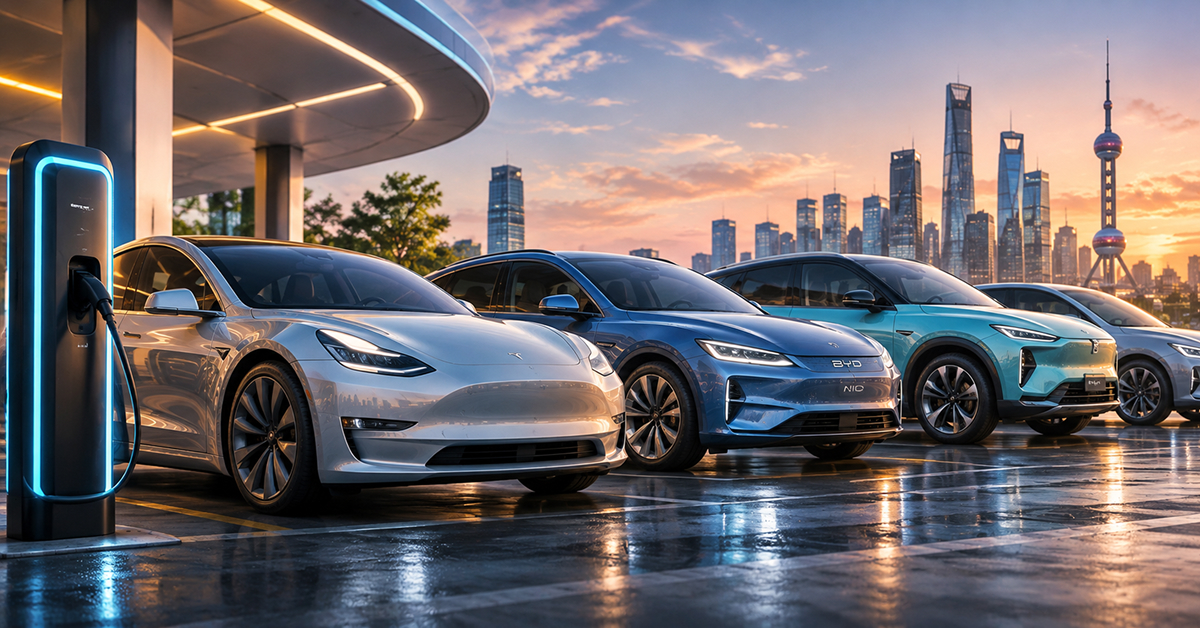
When it comes to stock market performance, BYD has experienced a recovery following weaker results over the past year. Compared with six months ago, its share price is down approximately 15%, but over the past month, it has recorded a noticeable increase of around 5%, representing a positive development. Similar percentage gains have also been observed on a daily basis in recent trading sessions, suggesting that the company is gaining momentum. On the other hand, Tesla is a much more recognizable brand among the general public than its Chinese competitor, which can sometimes have a positive impact on its share price. At the same time, almost every company announcement and strategic move is closely followed by the public and investors. Tesla’s stock chart has been in the red over the past year, with losses reaching almost 13% in just a few recent trading sessions. Looking at the share price movements of both companies, it becomes increasingly clear that Chinese manufacturers are gaining momentum while Tesla is facing growing pressure in the market.
Who Will Be The Winner?
Ultimately, the battle for dominance in the electric vehicle market is only beginning to intensify, and Tesla no longer enjoys the almost unchallenged leadership position it once held. Chinese manufacturers have demonstrated that they can offer technologically advanced vehicles, competitive prices and increasingly sophisticated solutions, changing consumer expectations around the world. Particularly important is the fact that China’s competitive advantage is not built solely on car manufacturing, but also on the development of batteries, software and an entire supply chain. This gives Chinese companies greater control over costs and allows them to adapt more quickly to market changes.
Nevertheless, Tesla and Elon Musk should not be underestimated. The company still benefits from a powerful brand, an established charging infrastructure, extensive technological experience and substantial financial resources. Its future position will depend on its ability to respond to increasingly aggressive competition and maintain the confidence of both customers and investors. For capital markets, this situation creates interesting opportunities but also introduces additional uncertainty. Investors will be closely monitoring sales figures, profitability, technological innovation and expansion into new markets. The coming years could prove decisive in determining the balance of power in the automotive industry. The winner of this race will not necessarily be the company that first started the electric vehicle revolution, but rather the one that manages to continue it most successfully and adapt to the rapidly changing market.